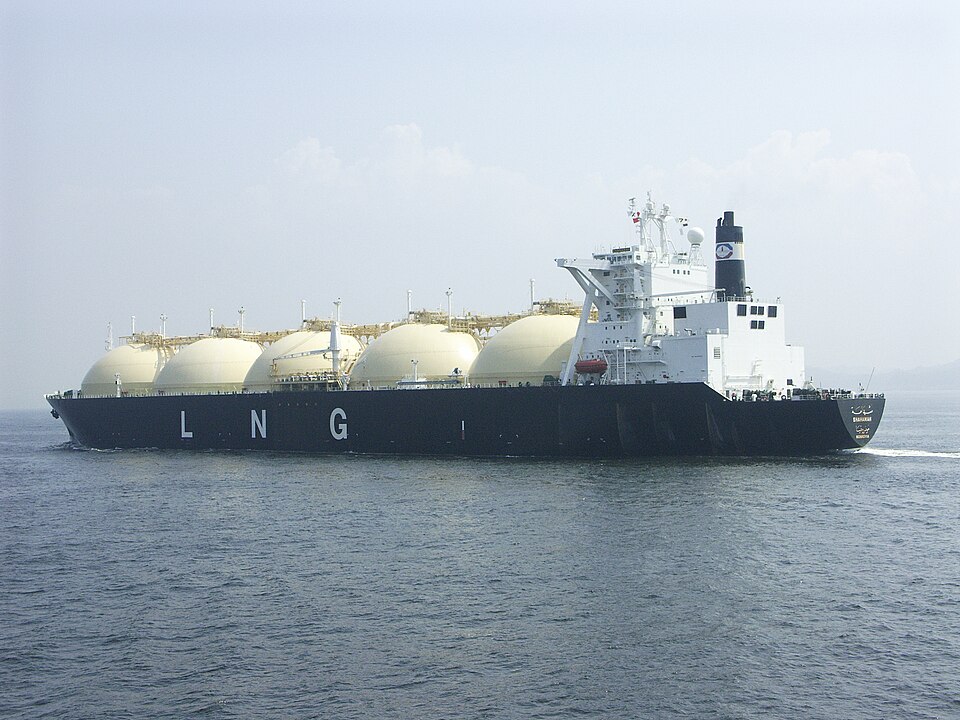
As one of the largest suppliers of energy to global markets, one might not expect Qatar to be a hotbed of climate tech activity. But mindful of the finite nature of its hydrocarbon resource as well as the obvious exigencies relating to residing in a volatile neighbourhood, the Gulf state is quietly cultivating a deep tech pillar to its economy.
So how does a vast liquified natural gas (LNG) industry possibly become greener? One approach is to make hydrogen fuel production less carbon intensive. Catalytic methane decomposition or CMD is a process now being developed into a commercial opportunity by a consortium of Qatari researchers and industry players. Also known as methane pyrolysis, the process thermally strips methane directly into hydrogen gas and solid carbon. This differs from traditional steam methane reforming, which releases heavy CO₂ emissions. The resulting carbon is instead captured in solid forms like carbon black, carbon nano-tubes, and graphene, with zero direct greenhouse gas emissions. To overcome the immense energy traditionally required to break methane’s resilient bonds, research scientists are working on advanced transition-metal and carbon-based catalysts to optimise yields at significantly lower temperatures. So with over 3,400 hours of local sunshine available per year plus rapid progress in both solar power (4 Gigawatts expected by 2030) and advances in solar furnace technologies, the path forward suddenly seems a lot clearer.
But translating this technology from university laboratories to global industrial scale deployment requires a tightly integrated innovation ecosystem and some big thinking. Qatar University’s Gas Processing Center has led the foundational research on catalyst morphology whilst Qatar Shell Research & Technology Center has been connecting the dots with commercial pilot operations. Concurrently, project partner Texas A&M University at Qatar has been developing rigorous modeling to evaluate global market competitiveness. Meanwhile the Earthna Center, a non-profit policy research and advocacy center, established by the Qatar Foundation, has been developing the necessary circular economy policy frameworks. State-backed heavyweights like Qatar Energy will likely be called upon to provide the massive capital expenditure required to transition into a large-scale, market-ready infrastructure.
The global commercialization of methane pyrolysis, however, hinges entirely on a critical economic driver: the “carbon lever.” Producing one kilogram of clean hydrogen inherently yields three kilograms of solid carbon. So to achieve cost parity with traditional, heavily polluting hydrogen production, ventures must successfully monetise this massive byproduct. Fortuitously, high-grade carbon black currently commands premium pricing, often exceeding $1,350 per ton. The product already serves as a vital component in advanced battery electrodes, conductive inks and industrial polymers. A number of businesses globally (such as Synergen and the Graphene Manufacturing Group – GMG) are also developing pilot plants that utilise various plasma and thermal pathways to both produce hydrogen and capture high-value solid carbon. Incidentally, GMG is creating a further pipeline of green energy technologies from research generated at the University of Queensland.
However, despite these encouraging signals, deploying methane pyrolysis at the sheer scale required for the global energy transition would generate tens of millions of tons of solid carbon annually, rapidly saturating existing specialty markets. The long-term viability of this clean energy solution therefore depends on pioneering high-volume, lower-margin applications. For example, integrating solid carbon into bulk construction materials or green cement in sufficient quantity to absorb the industry supply. Another promising use for carbon black was recently outlined in a paper led by researchers from the University of Hohenheim in Stuttgart, Germany. It turns out that solid carbon may have soil remediation properties, through its ability to absorb and neutralise polluting heavy metals. A lot of work lies ahead to validate low emission fuel production and byproduct valorisation on a grand scale.
Qatar has recently launched a $30 million co-investment fund for deep tech startups and a $1Bn fund of funds pool to attract venture capital firms.
Genius ReFi connects researchers, entrepreneurs, investors and industry to build high value science-based ventures.
Join our mailing list or participate in the free Genius ReFi innovator community on Discord.
Image credit: 青空白帆, CC BY 2.1 JP via Wikimedia Commons