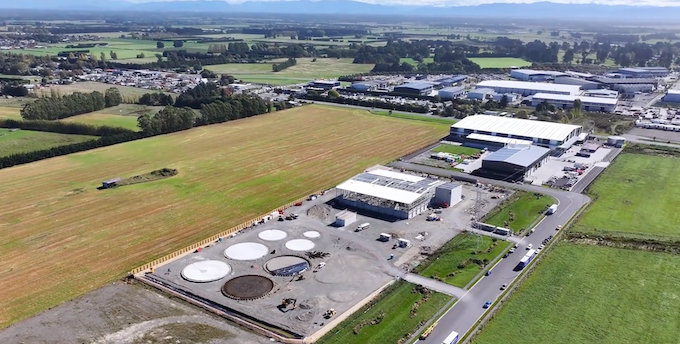
As environmental regulations steadily become more stringent globally, a New Zealand company is wading into the sewage ponds and waterways of Britain turning raw organic waste into high value byproducts such as biogas and fertilisers.
Cetogenix developed technology platform, Ceto-Boost™will be a key feature of the $23M Hydrothermal Oxidation– Future-proofing Bioresource Management project, led by Anglian Water Services and funded by the UK water industry. The project aims to address waste circularity and contaminant management across rural and urban environments, the technology uses hydrothermal oxidation to transform complex organic waste streams into renewable natural gas and green ammonia, while reducing emissions and eliminating harmful contaminants. The project will be a test bed for deploying the technology at scale for both municipal wastewater and sludge.
Cetogenix was spun out of Scion, a Crown Research Institute. In 2022 the company raised $4.5 million led by deep tech incubator Pacific Channel. The incubation process for such spinoff ventures operates as a partnership, with government chipping in a portion of the seed funding in the form of a repayable grant. It has not yet been announced how deep tech incubation will continue to be managed under the recent New Zealand innovation reforms. Now part of the Bioeconomy Science Institute, Scion based in the North Island town of Rotorua, sits atop the most active volcanic region of New Zealand. The institute is no stranger to research involving valorisation and neutralising of waste streams. In 2015 Scion received an extraordinary $400,000 grant from the Gates Foundation as part of the aptly named “Reinvent the Toilet Challenge“. The goal was to miniaturise industrial hydrothermal oxidation into a closed-loop, off-the-grid convenience suitable for developing nations.
But the immediate predecessor to Cetogenix’s technology was Scion’s award-winning TERAX™ platform, developed in partnership with the Rotorua Lakes Council. Scion’s core research here focused on how hydrothermal oxidation could break down complex biological polymers within municipal sewage sludge, without the need for energy-intensive pre-drying. But Rotorua also sits within the largest pine plantation in the Southern Hemisphere. Log exports and processing form a major part of the regional economy. Scion’s original mandate was to solve gnarly problems for the pulp, paper and wood processing industries. Cetogenix was birthed in an intellectual setting filled with deep scientific thinking about high temperatures, extreme pressures and environmental protection.
Genius ReFi connects researchers, entrepreneurs, investors and industry to build high value science-based ventures.
Join our mailing list or participate in the free Genius ReFi innovator community on Discord.
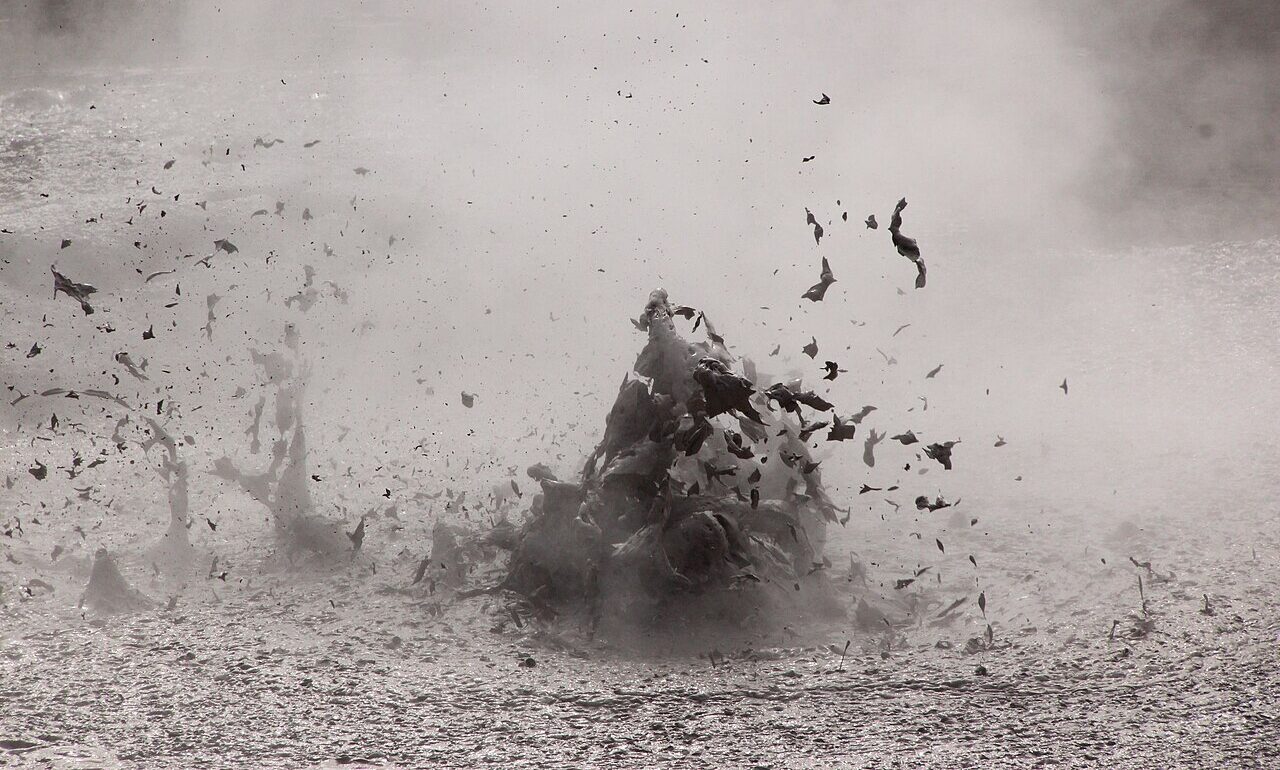
Image credit: Takver CC BY-SA 2.0, via Wikimedia Commons