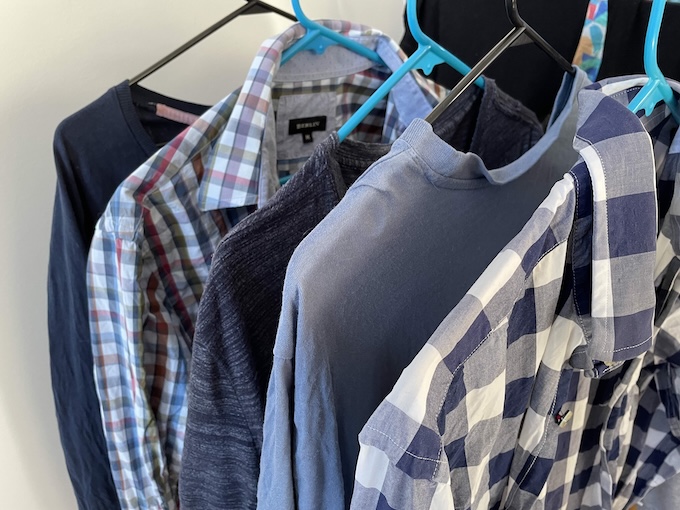
The global fashion industry faces a monumental environmental challenge. Currently, less than one percent of clothing is recycled back into new garments. The primary roadblock is blended fabrics, such as poly-cotton, which are notoriously difficult to separate without severely degrading the underlying fibers. A Stockholm-based deep-tech is joining the global charge towards re-processing mountains of textile waste.
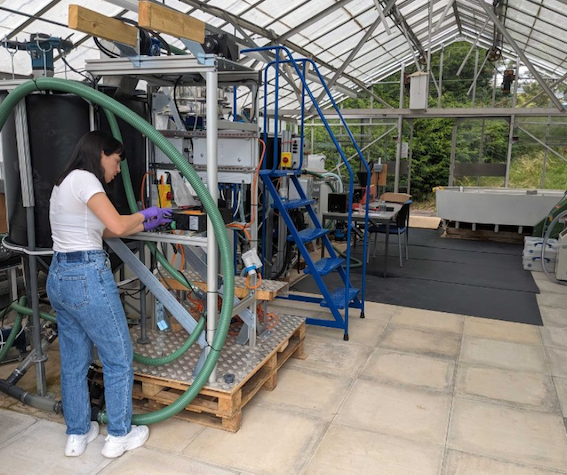
Renasens has developed a patented, waterless, and chemical-free recycling platform driven by a remarkable innovation – modified supercritical carbon dioxide. By utilizing CO₂ in a state where it behaves simultaneously as a liquid and a gas, the system can cleanly extract dyes and additives while separating blended fabrics. Crucially, the process avoids de-polymerisation. Cotton and polyester fibers are recovered completely intact at the macro-molecular level. These high-quality recovered materials are designed as seamless “drop-in” solutions that can subsequently be fed directly into existing spinning and textile manufacturing plants without requiring new machinery. This is a critical differentiator that should help scale the venture quickly.
The core concept was discovered by founder and CEO Dr. Jade Abir Bouledjouidja. During her PhD studies at Aix-Marseille University in France she initially focused on using supercritical fluids for polymer extraction and drug delivery. But she soon realised that the same polymer science could also untangle complex textile structures. She relocated to Sweden’s KTH Royal Institute of Technology to validate her theories. Her subsequent research successfully proved the technology’s viability for textiles, leading to the launch of Renasens as an official spin-off in September 2022. The venture was named the 2025 Nordic Climate Startup of the Year at Oslo Innovation Week.
The company is now scaling rapidly, with a goal to process 100,000 tonnes of textiles by 2030. Backed by a €10 million seed funding round secured earlier this year, Renasens is constructing an industrial pilot plant in Borås, Sweden, taking a massive step toward weaving a genuinely circular future for global fashion, particularly across Europe. Since last year, EU Member States a required to offer separate textile collection systems. By June 2027, every country must implement an Extended Producer Responsibility program. Fashion brands are also obligated to pay a levy according to the volume and type of textile products they produce. However, recyclable or recycled products pay discounted fees.
Other companies such as Australia’s Samsara Eco have also been addressing similar problems. But with an estimated 90+ million tonnes of textile waste generated globally every year, it seems like there is plenty of headroom for startups in this space.
Genius ReFi connects researchers, entrepreneurs, investors and industry to build high value science-based ventures.
Join our free collaboration channel on Discord
Image credit: Paul Spence – founder / editor Genius ReFi