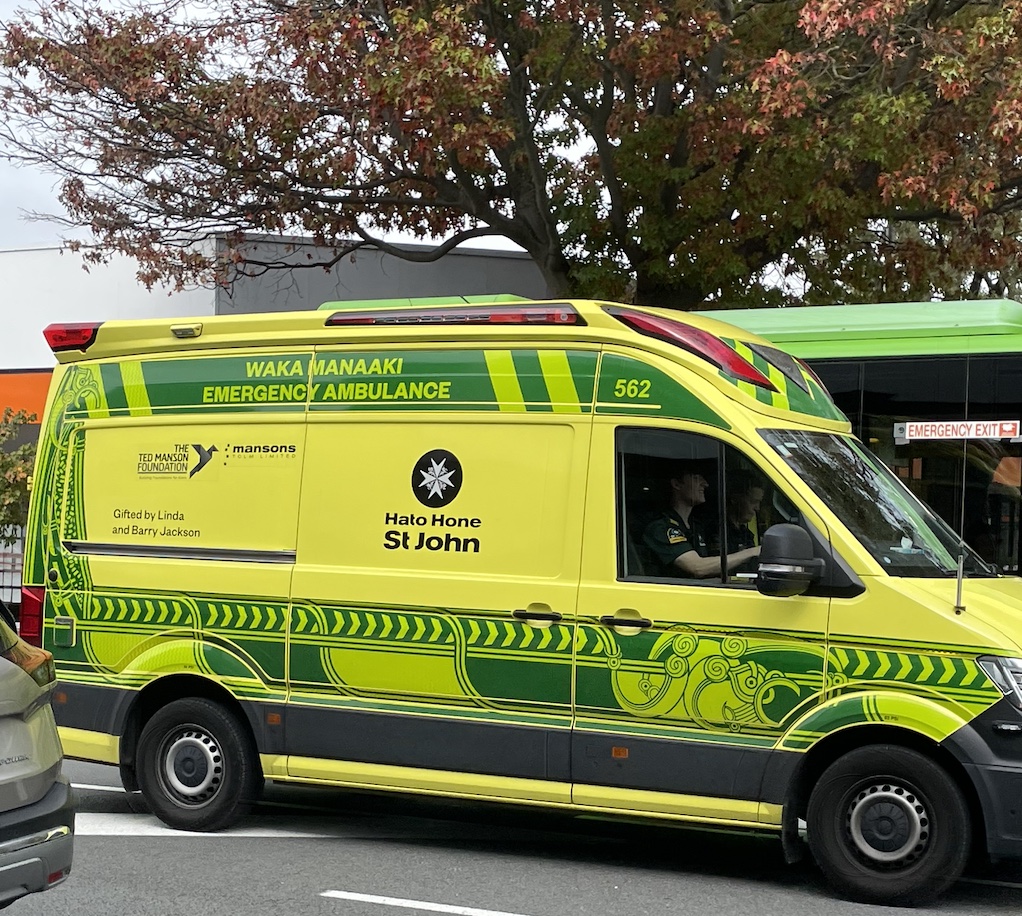
On a sunny Autumn day in 2023 my close colleague Eddie had a very odd experience. Striding purposefully across our university car park, he suddenly realised that both his left leg and arm had simply ceased to function. “My leg felt like a huge weight was holding it to the ground. All I could do was drag my apparently broken body the remaining 100 metres to the sanctuary of the car”, he later reported. Within ten minutes Eddie was seated in the back of an ambulance being assessed for stroke by a paramedic. Despite all symptoms completely resolving within a few minutes, a further six hours was spent under close observation in the emergency department.
Transient ischemic attack (TIA) or “mini stroke” can affect people of all ages. An estimated 5 million TIAs are reported globally each year. The number of unreported cases is unknown. Most resolve within a few minutes without any further harm. However emergency responders take TIA seriously because in 10-20% of cases it is a precursor to a potentially life-threatening full stroke. Early diagnosis and treatment is essential for all kinds of stroke, with faster treatment times being associated with better patient outcomes. But brain scans are traditionally performed by computed tomography (CT) scan or magnetic resonance imaging (MRI) only found at major hospitals. Each scanner weighs up to ten tonnes, requires very low temperature super-coolant and costs millions to acquire and operate. Portability has never been an option. Now New Zealand deep tech spin-off company Wellumio is setting out to solve this problem.
The core technology behind Wellumio’s portable MRI machine (Axana) has its origins in the laboratory of the late Sir Paul Callaghan, one of New Zealand’s most eminent scientists. A professor of physics, who in 2004 co-founded Magritek, a company that developed foundational technology around portable nuclear magnetic resonance (NMR) spectrometers. The devices, originally developed for studying Antarctic sea ice, are now used across a range of applications such as chemical analysis, education and pharmaceutical research. Callaghan was also the founding Director of the MacDiarmid Institute for Advanced Materials and Nanotechnology, one of New Zealand’s first Centres of Research Excellence (CoRE). The Institute is a national network of scientists (physicists, chemists, and engineers) from multiple universities and government owned research institutes. MacDiarmid’s core mission is to use materials science to address global challenges and transform New Zealand’s economy.
Interested in science research commercialisation? Click on this invite link to join our free research and business collaboration channel on Discord. Meet potential co-founders, investors and industry contacts.
Fast forward to 2019. After a number of serendipitous collisions of minds, in part thanks to MacDiarmid, Wellumio was formed with the objective of extending the applications of “inside out” NMR technology into medical diagnostics. Under this approach, the device effectively shines a “beam” of magnetic sensitivity into a specific area of the body from a small, external device. Wellumio founders and inventors developed a 50kg, battery-powered scanner that uses “Pulsed Gradient Free Mapping” (PGFM) and small perma-magnets, eliminating the need for the heavy magnets or shielding found within a traditional MRI. This opens up the possibility for first responders to carry the devices routinely, allowing identification of stroke biomarkers within about four minutes.
Wellumio has built a strong technical and clinical case around the benefits of delivering stroke assessment within the “golden hour” of patient care. Investors are clearly also seeing the advantages. In 2026 the company raised $7.3M in a “pre-series A” capital round aimed at funding growth in the core team of experts as well as supporting further global business development.
Genius ReFi connects researchers, investors, entrepreneurs and industry players interested in the commercialisation of science.
Image credit: Paul Spence, founder Genius ReFi