Greentech venture Arborea is bridging the gap between design engineering and biotechnology with a synthetic leaf that creates food directly from sunlight. Evolution of the company from a postgraduate student project to an international scale-up brilliantly illustrates the additive power of multi-disciplinary innovation clusters in bringing translational “deep tech” to market.
Founder and CEO Julian Melchiorri conceived the idea of the “BioSolar Leaf” during his studies within the joint Innovation Design Engineering Masters programme, through Imperial College in London and the Royal College of Art. Melchiorri’s early work included “breathing” biological chandeliers imagineered during his entrepreneur residency at the Victoria & Albert Museum, this eventually evolved into the BioSolar Leaf project. The university environment not only offered a platform for technical validation, but also assistance with grant funding and startup support through SynbCITE, a leading UK provider of specialised expertise and academic leadership in synthetic biology.
Arborea’s commercial journey was accelerated at the Imperial White City Incubator an innovation precinct closely linked to SynbCITE and one of several operated by Imperial College. Located within the Translation & Innovation Hub or I-HUB, the incubator offers early-stage academic startups the high-spec laboratory facilities required for science-led ventures. Beyond providing essential infrastructure like wet labs and specialised equipment, the facility integrates startups into a broader “Living Lab” setting. This proximity allowed Arborea to collaborate on a world-first pilot, actually installing their test bed carbon-capturing panels on the rooftops of the Imperial College campus in West Central London.
Interested in science research commercialisation? Click on this invite link to join our free research and business collaboration channel on Discord. Meet potential co-founders, investors and industry contacts.
In 2026, Arborea shifted its focus toward industrial-scale production through a major expansion into Portugal. Backed by €5M in investment from Indico Capital Partners and the Portuguese national development bank BPF, the company is establishing a large-scale facility near Lisbon. The move leverages Portugal’s high solar radiation, an obviously critical input for photosynthesis, whilst marking a transition from academic pilot program to a viable commercial supply chain. Apart from a sunny climate, Portugal also has a very active startup scene. With Lisbon based lead funder Indico Capital specifically focusing on high tech science, engineering and ocean related ventures the move to Portugal must not have been a difficult decision.
At the heart of this expansion is NOvo Protein™, a high-value functional ingredient extracted from microalgae. Unlike traditional algae food products, which often suffer from strong “oceanic” flavors and green colouring, NOvo uses a gentle cultivation and extraction process to achieve a neutral taste and colour. The science behind NOvo centers on mimicking the behavior of egg whites or dairy proteins. Its high water solubility and natural gelling and foaming properties make it an easy alternative for plant-based milks for example. By sequestering CO₂ at atmospheric pressure the synthetic leaf could play an important future role in the supply of net carbon negative food to a hungry world.
Genius ReFi connects researchers, entrepreneurs, investors and industry to build high value science-based ventures.
Join our free collaboration channel on Discord
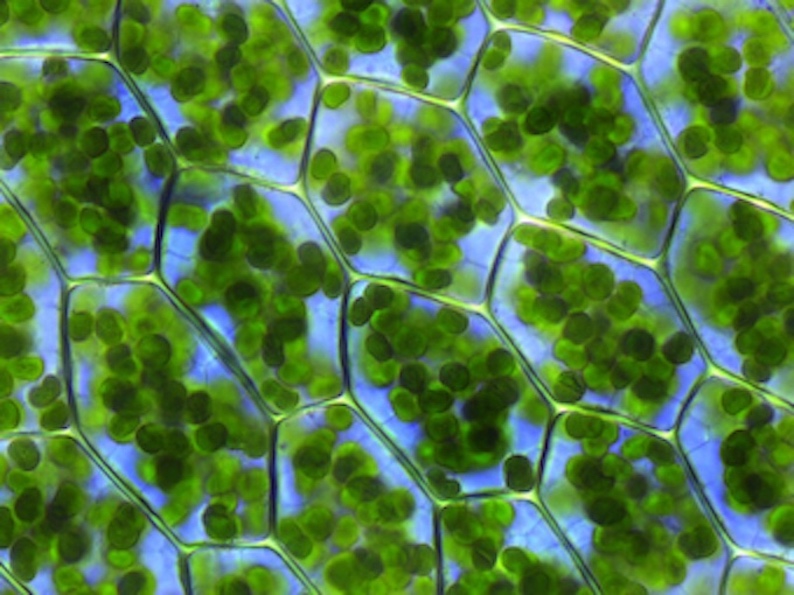
Image credit: Kristian Peters — Fabelfroh, CC BY-SA 3.0 via Wikimedia Commons