A ground-breaking joint R&D programme between The University of Manchester, UK and Khalifa University in Abu Dhabi has begun to reap rewards through publishing new research on the properties of graphene. Established in 2022, the engagement has also been a model for generating economic benefits through international collaboration between research institutions.
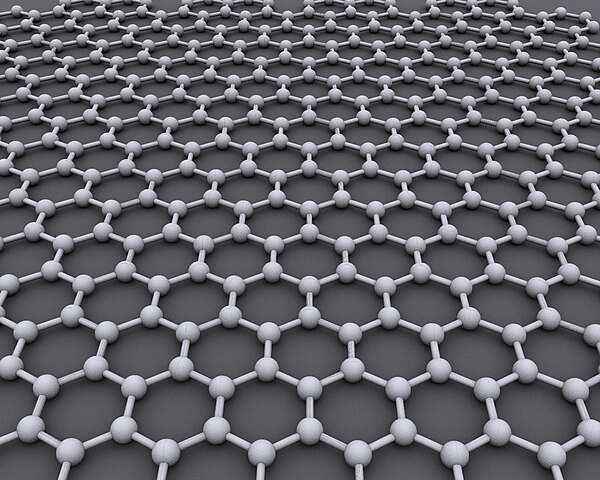
Forming a fundamental building block for other carbon materials, graphene is the thinnest material yet discovered and is reportedly 200 times stronger than steel, highly flexible and an excellent conductor of electricity. Researchers from the University of Manchester discovered graphene in 2004, the work eventually leading to a 2010 Nobel Prize in Physics. Published in Nature during 2024, the new joint research on graphene describes a significant breakthrough in controlling the electro-chemical properties of the intriguing carbon nano-material, offering a potential new pathway for next-generation electronics and hydrogen technologies.
Graphene is known to be selectively permeable to protons. This turns out to be a very useful property for membranes and fuel cells. But protons can also chemically bond with graphene (a process called hydrogenation). This turns the material from an excellent conductor into an insulator useful for electronics. But these two processes usually interfere with each other. So the researchers created a double-gated graphene device, allowing independent control of two key factors at the graphene’s surface, electric field and charge-carrier density. By precisely tuning these factors, decoupling of the two proton-related processes was achieved.
Interested in science research commercialisation? Click on this invite link to join our free research and business collaboration channel on Discord. Meet potential co-founders, investors and industry contacts.
The joint R&D programme between The University of Manchester and Khalifa University was designed to provide a pipeline of projects with commercial potential. Water filtration, construction, energy storage and composites are the main focus areas. The University of Manchester has a long history of supporting research business ideas through its Innovation Factory programme, working with academic and student inventors to identify research that has the potential for technology licensing or that may form the basis of new spin-out companies. Khalifa University of Science and Technology (KUST), is the UAE’s top-ranked research-intensive institution, with a concentration upon sciences, engineering and medicine. KUST aims to be a catalyst for the growth of Abu Dhabi and the UAE’s rapidly developing knowledge economy
Genius ReFi is a collaborative platform for researchers, investors, entrepreneurs and industry players interested in the commercialisation of science.