It has been a huge start to the year for Carbonaide CEO Tapio Vehmas. His carbon sequestration venture not only secured a €3.7 million funding round, but also set up its first industrial scale production facility. And if that wasn’t success enough, a block of certified carbon credits from the process were also minted and sold. Investors and governments globally are now waking up to the sector as concrete-making technology evolves rapidly.
Spun out in 2022 from research driven by Vehmas at Finland’s VTT Technical Research Centre, the venture “captured” early interest from several Nordic investors. Now having validated both the science and the business model within the VTT – the company is ready to scale. VTT is regarded as one of Europe’s leading research organizations, operating in-house incubation program VTT Launchpad for projects such as Carbonaide that demonstrate commercial potential. With a firm focus on global impact, 14 science and technology based startup companies have emerged from the incubator since 2019.
Interested in science research commercialisation? Click on this invite link to join our free research and business collaboration channel on Discord. Meet potential co-founders, investors and industry contacts.
The Carbonaide method allows concrete manufacturers to utilise carbon dioxide to strengthen their products and store carbon dioxide permanently. The fresh capital will be deployed to further develop a software platform for managing CO₂ flow, carbon measurements and issuing carbon credits. Resourcing new research into next-generation carbon dioxide curing for concrete production is also an important direction for the company, especially considering the estimated global market size for precast concrete alone is around $130Bn.
As one of the most carbon intensive industrial processes, concrete production innovations continue to attract the eye of both investors and government agencies. Carbonaide’s latest funding round was led by existing owners, Vantaan Energia, Redstone, and Ihantola Invest, joined by other Finnish private investment firms. The Carbonaide investment also comes hot on the heels of new funding for Co-Reactive, a spinoff from Aachen University. Based in Dusseldorf, in the heart of the Germany’s heavy industry region, the venture received a seed financing round of €6.5 million to scale its CO₂ mineralisation technology.
Government entities from Europe to the Indo-Pacific region are also becoming actively involved in supporting carbon capture research and development initiatives. Most notably India, which has recently announced a massive $2.2Bn investment into carbon capture across a range of industrial sectors, including cement making. The investment follows inking of the Europe-India free trade agreement which requires imported products to meet European environmental standards for low carbon emissions. The Singapore government has provided $55 million in grants for research with scientists at Nanyang Technological University (NTU) have developed a 3D concrete printing method that injects steam and carbon dioxide directly into the concrete mix.
The Australian approach has largely involved partnering with existing industry players. For example ASX listed Calix received a $15M government grant to work on “kiln carbon capture” processes. Over in New Zealand, climate tech startup Neocrete took home $6.5M in funding during 2025 from Singapore’s Wavemaker Partners and government owned NZ Green Investment Finance to scale up its “nano-activator” tech that replaces up to 50% of cement in concrete with volcanic ash and industrial waste. Interest in the topic is so great that in July 2026, Australia will be hosting a regional APAC Carbon Capture Summit.
Genius ReFi is a collaborative platform for researchers, investors, entrepreneurs and industry players interested in the commercialisation of science.
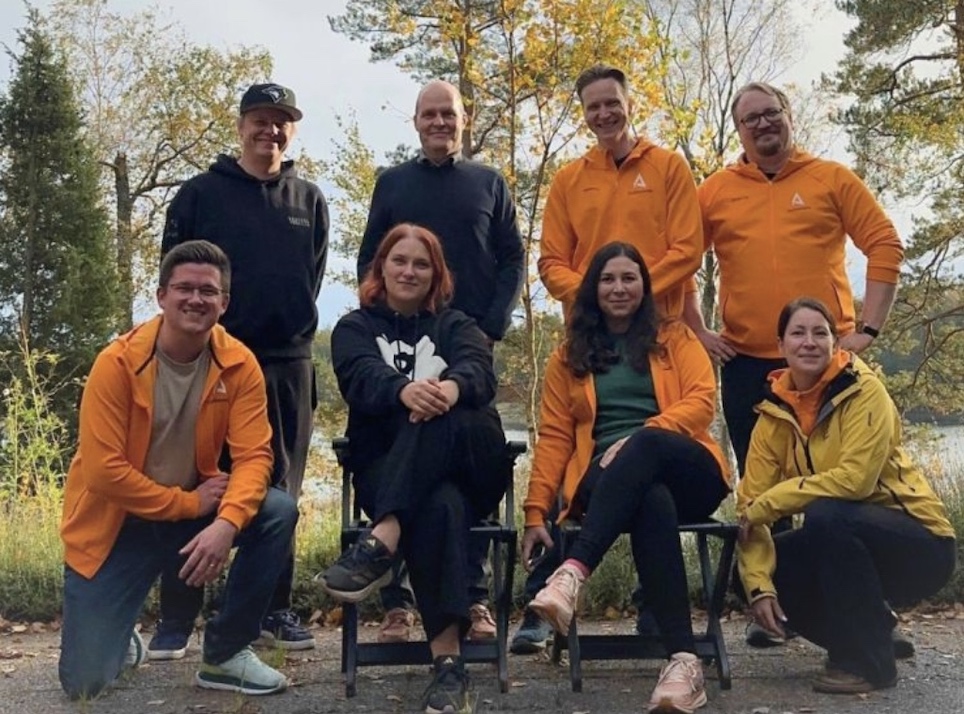
Image credit: Carbonaide